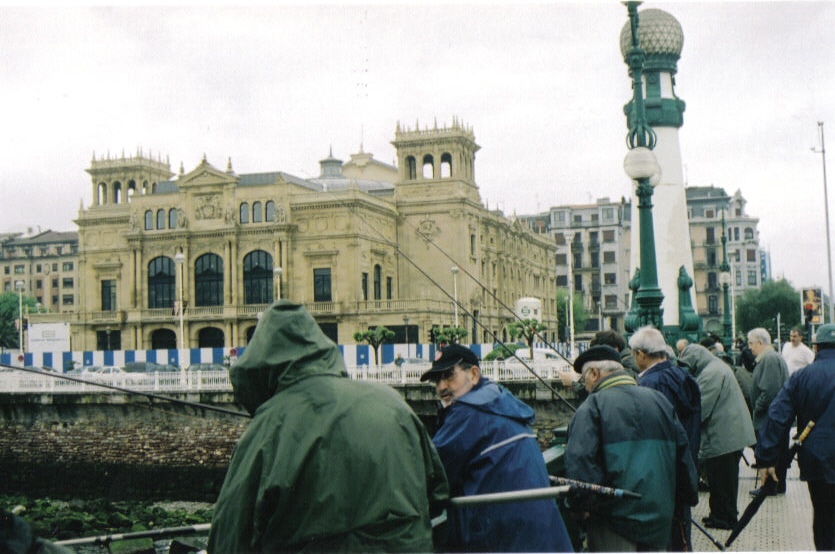
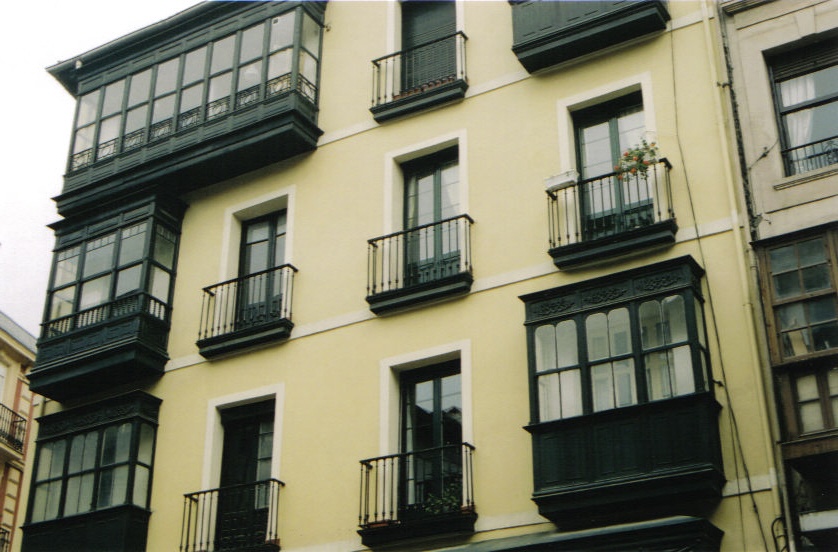
Look at this one-of-a-kind work of art. It's mine...
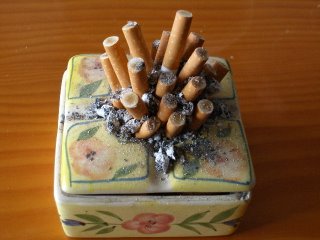
But don't try this at home.
 Belém. Strictly speaking, Belém is still part of Lisbon except that it is six kilometers from the city center and looks like a different world altogether. It sits by the river and offers a splendid view of the waters lined by a bridge so tall it is almost a skyscraper! Belém's main attraction is a 16th-century monastery declared by UNESCO as a world heritage site, which transports you back into an era long gone as soon as you step into it. Here's a picture of the lovely cloister.
 Sintra. Before we decided to go to Portugal, I'd told Jose Maria that we must strive to do some physical activity, aside from the usual church-hopping which he liked no end. Sintra was the closest we got to being "physical." There was a fairy-tale-like castle on top of a hill from where, on our way back, we had to hike because a fallen tree somewhere had blocked the roads that the buses couldn't pass. We saw a lot of trees, some ducks, horses, and a rather boring lake. Not bad, haha! Here's a picture of the castle.
 Évora. This place is white. The houses, the public buildings, even the restaurants are white. It reminds me of the Spanish region of Andalucia where most of the old houses are white. The only thing that's not white in Évora is the cathedral and some unpainted buildings that have retained their natural stone color. The historic centre, also a UNESCO-protected site, constitutes a small town in itself and is set apart from the rest of the city by walls. Here's a picture of a white building.
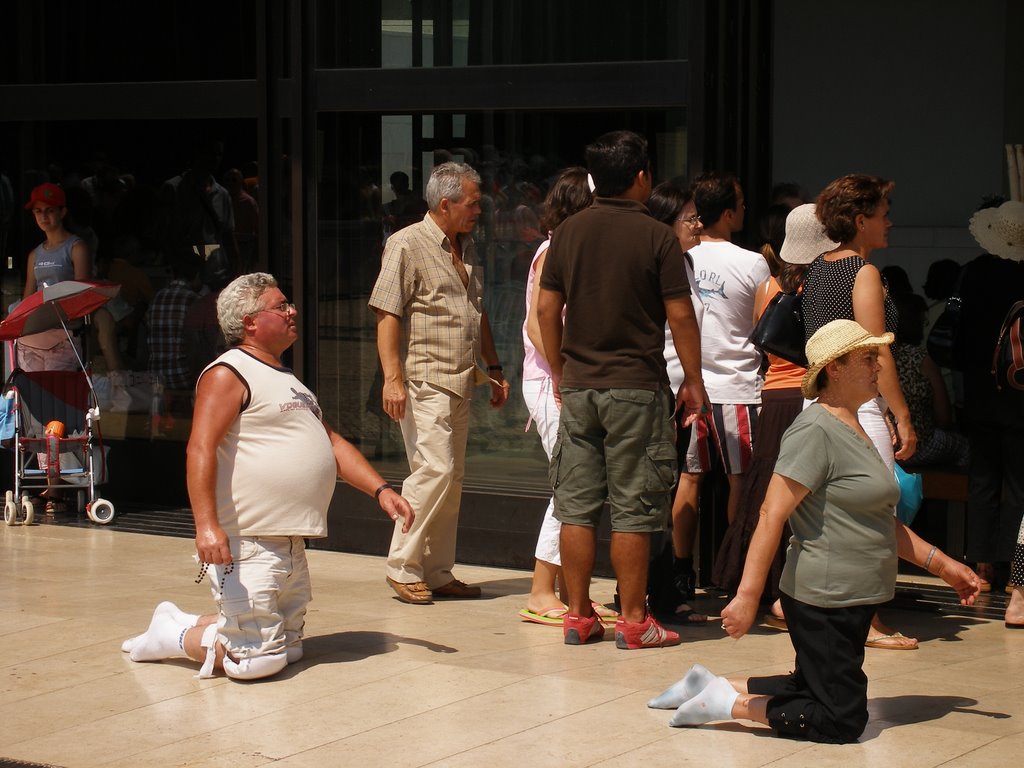
 Fátima. On our fifth day in Portugal, we found ourselves with nowhere to go. The previous night, we had been to check out the gay scene in Lisbon (which didn't amount to anything really), so we woke up with bloodshot eyes and a mild headache. At the bus station we wanted to pick a destination at random and it somehow occurred to us to visit Fátima. The city itself is not a marvel but the Virgin's apparition to Lúcia, Francisco and Jacinta piques the curiosity of many. The place was filled with pilgrims, camp sites and rosaries for sale. Here's a picture of some devotees who walk on their knees from the southern part of the square to the miracle site.
 Coimbra. We arrived in Coimbra on Sunday morning so the place seemed peaceful and dreamy. Only a few cars were on the streets and most commercial establishments were closed. If there's one thing I liked about this city it certainly was the university, which the Portuguese consider as the "Oxford of Portugal" because it is old and has great architectural value, unlike most modern European universities. A small corner of the 18th-century library is shown in the following picture.
 Oporto. Old houses, huge crowds. Pretty much resembles the 19th-century Manila I've seen in black and white photos. I consider Oporto one of the most memorable for four reasons. First, because on the day that I had to wash my clothes all the laundry shops seemed closed and I felt seriously threatened to put on used underwear. Second, because we group-toured a wine stockhouse and it was my first time to go to a wine-tasting (pic below). Third, because Oporto wine is sweet and has 20% alcohol content! Fourth, because it rained a lot even if it was summer.
 Braga. This is one place I don't remember a lot about. I think it's got the usual churches and other historical stuff. We were supposed to go to Bom Jesus do Monte, a church perched on a hilltop, but we missed the city bus, which made us miss the funicular, which gave us no time to hike all the way to the church because we had already bought the tickets for the ride back to Oporto. To José María's disappointment, we just meandered around the foot of the hill. Here's a picture of the main plaza.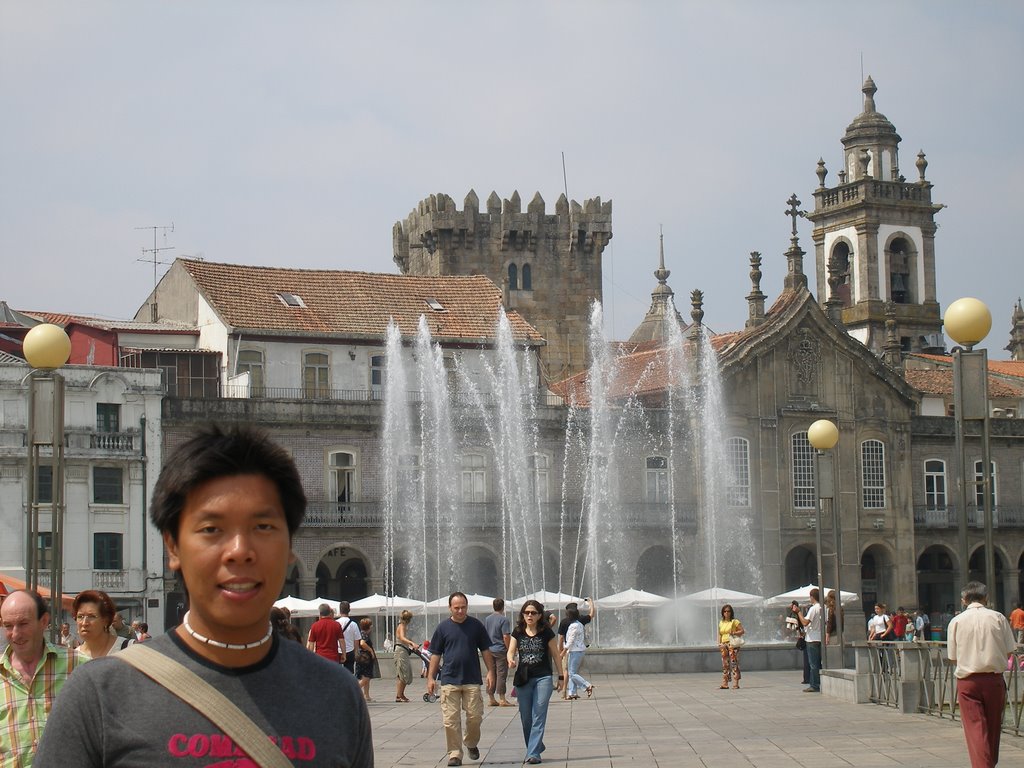
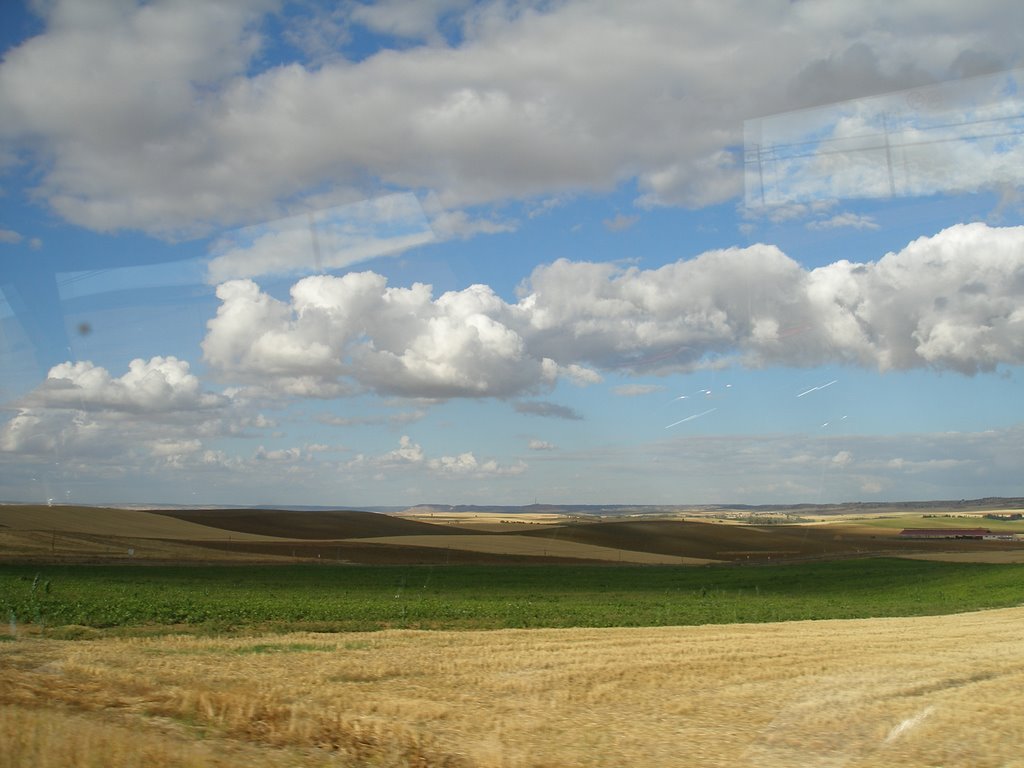 León. The road trip from Oporto took about ten hours so we arrived in León at night. We went out of the hostel to take a walk and sat on a bench in front of the cathedral. Apparently deceived by my oriental looks, a Japanese couple approached us to ask me to take their picture. After the shot, the woman attempted some small talk and was surprised that I was talking to her in Japanese even if I had just told her I was Filipino. That incident reminded me how long I hadn't used my Japanese...whew! Here's a sample of what's inside the lovely cathedral.
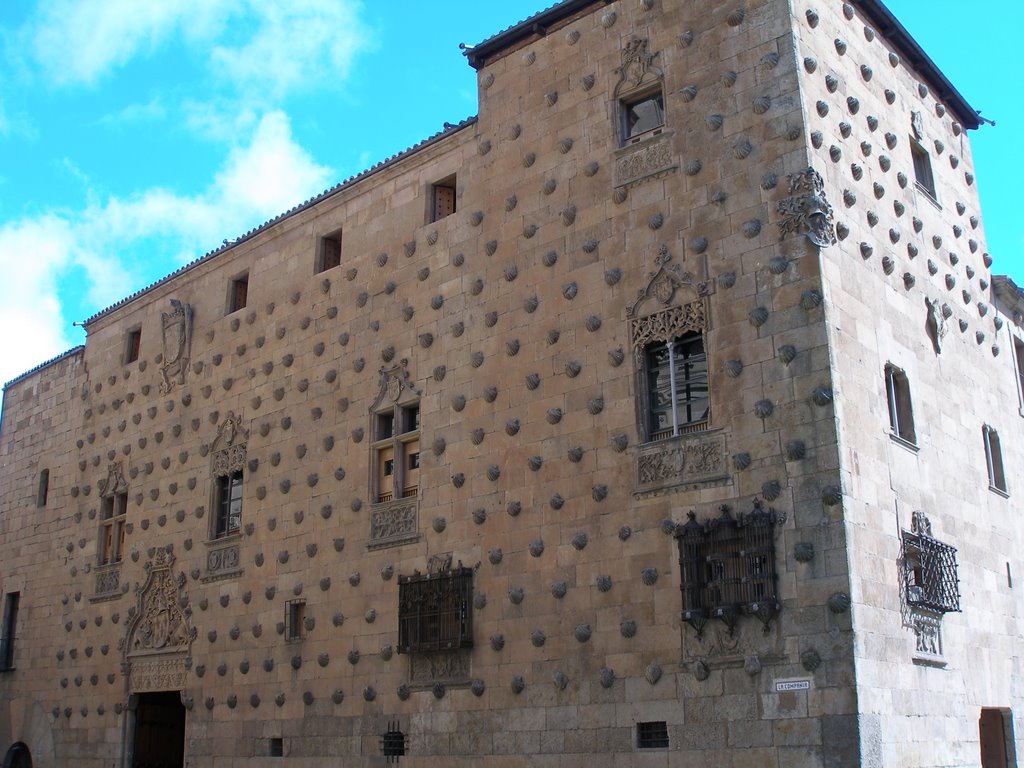
 Salamanca. In Filipino, the name of this place means magic, and indeed it is magical, for José María at least. He adores the place so much that he was at once incredulous and threatening when I told him it was somewhat visually boring. I thought Salamanca was lovely, but the uniform stone color of the buildings in the historic center was quite monotonous, unlike the varied hues of the old houses in Oporto. Here's a picture of the Casa de las Conchas, or the Shell House, which looks much better in picture than it really is.
 Segovia. One thing that surprised me about Segovia (aside from its breath-taking cathedral, its 1st-century Roman aqueduct and the alcázar) is that it is so expensive. At lunchtime, we had a rather difficult time scouting for a place that would suit our shoestring budget, since most restaurants were offering a standard two-course meal at 20 euros! For the first time in Spain, I felt like I was in France! Right below is a picture of the very old but still standing Roman aqueduct.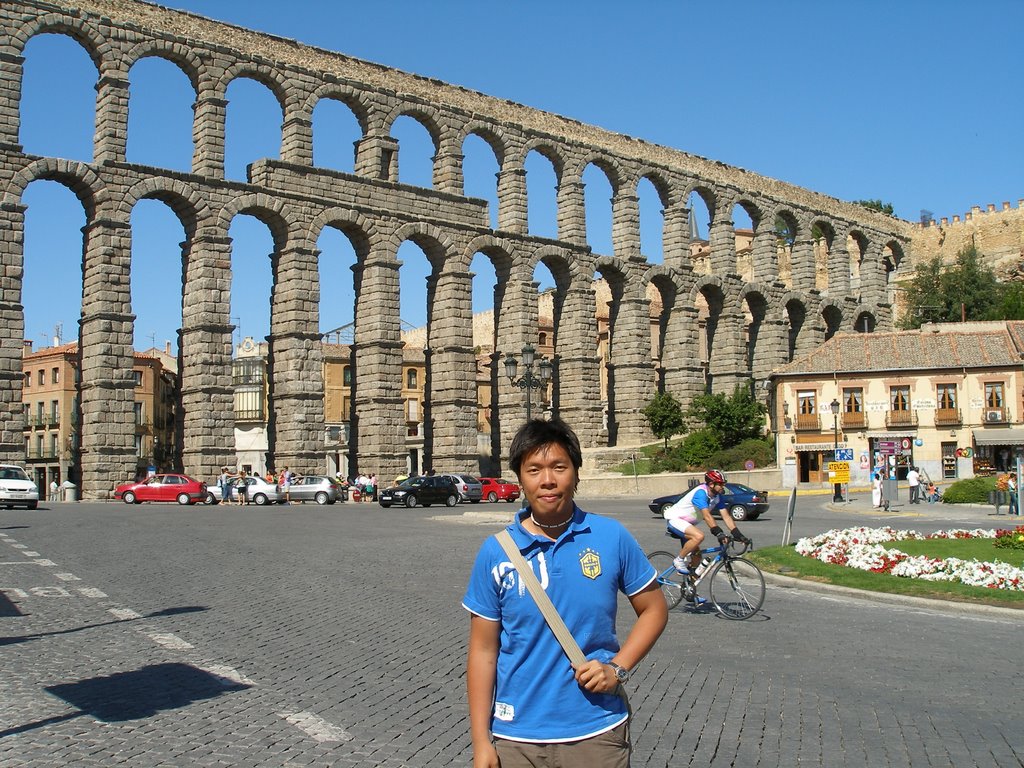
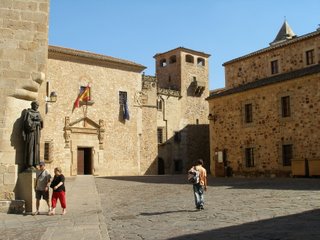 Mérida. I'd heard good things about Mérida even before, but all that went down the drain as soon as we got there. Aside from some major sights like the Templo de Diana and the Teatro Romano, the only thing that Mérida can boast is archeological ruins dating back to the Roman times. We gawked at A LOT of rocks -- or whatever's left of the settlements that used to occupy the city -- I almost wanted to study them. Here's a picture of the Teatro Romano.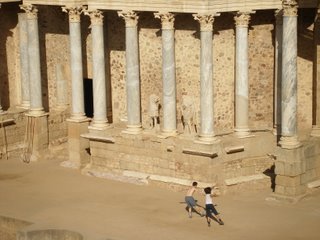
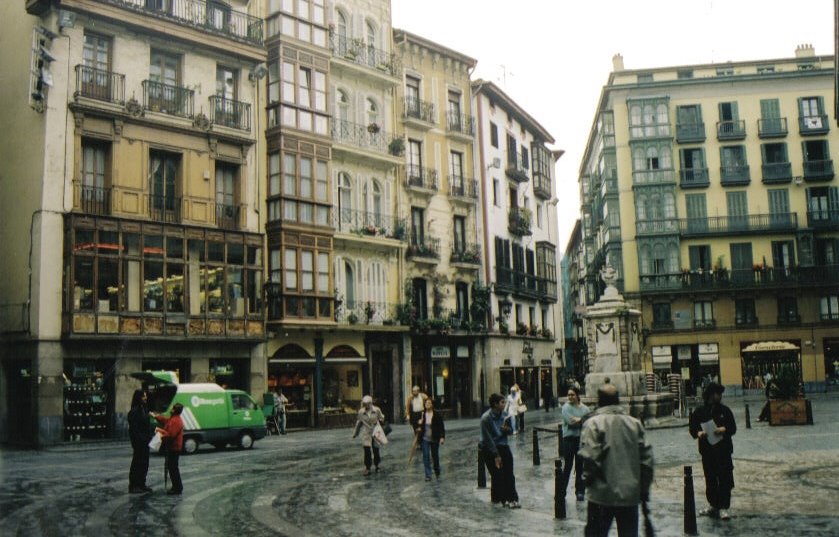
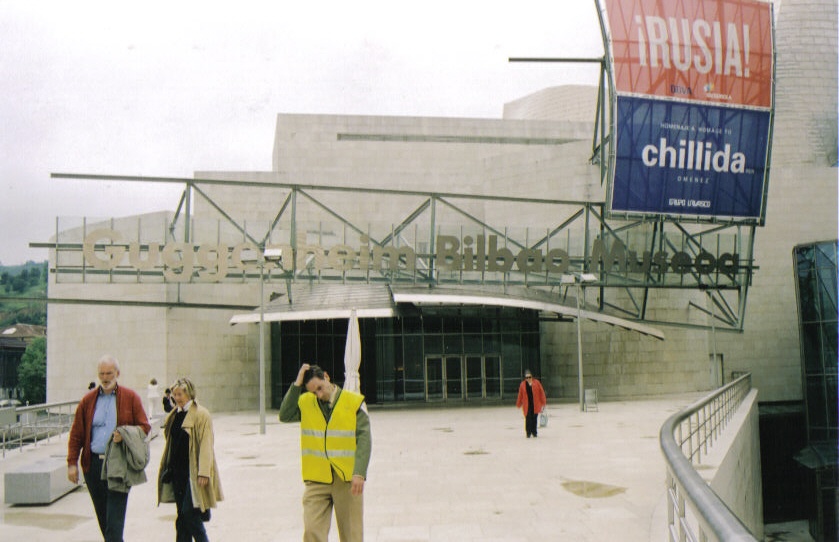
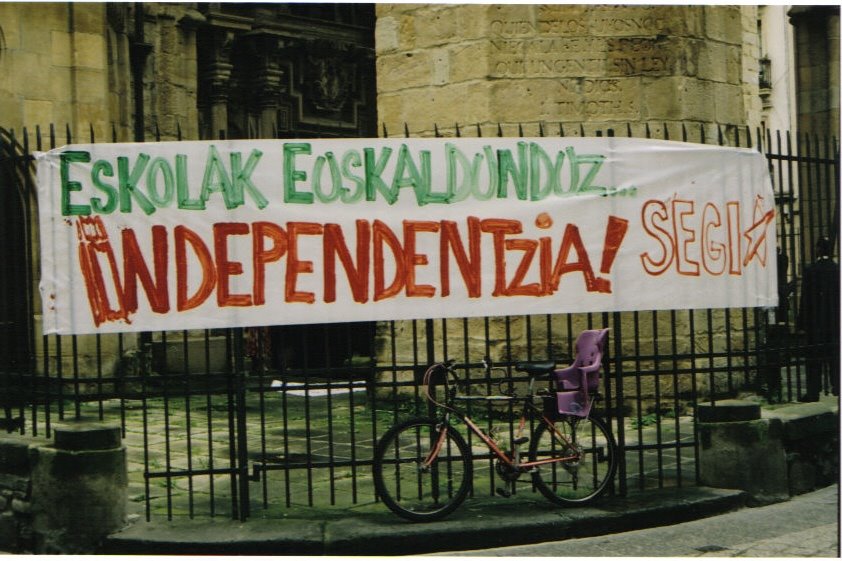
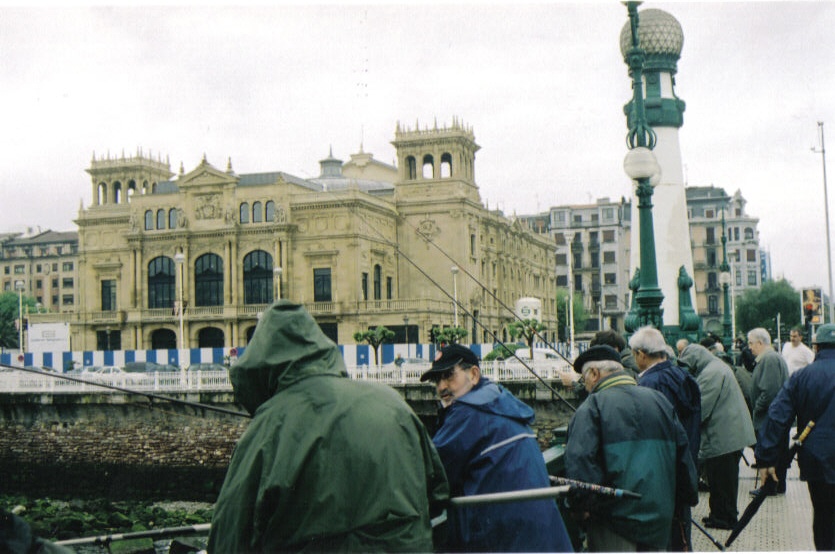
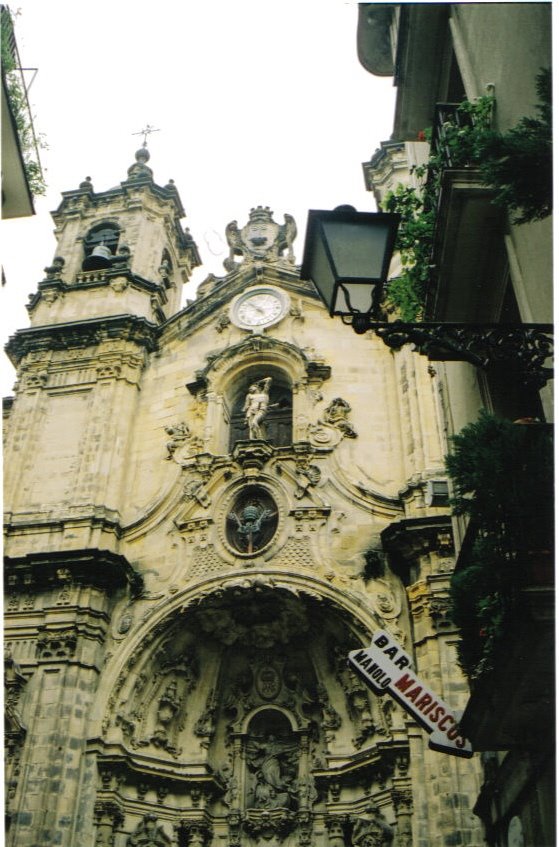 Two months ago I was at the height of thesis work. I was so burned out and tired of thinking I thought there was no other way to keep me from going nuts but to reward myself with a few days of completely brainless existence. So I searched the Net for low-cost flights (and there are many in Europe) and booked a weekend flight to northern Spain. The journey didn't turn out to be an entirely brainless activity, but spending a few days in Bilbao, San Sebastián and Logroño (May 5-8) did keep me within the bounds of sanity.