Since I arrived in Malaga last year, I have been to the department store to buy a greeting card for a grand total of two times. I'm not gifted with enough patience to produce handwritten letters and cards to stay in touch with friends and family from another part of the world. The relatively good postal services here are of use to me in matters relating to pure business, so that most envelopes sent out under my name are actually cold, unfeeling documents. Besides, my penmanship has grown increasingly similar to a highly intensified code, so the chances that I would be understood by others are higher with e-mail.
Those two times I actually had the need for a greeting card happened last week. The first one was for a cousin in New York. They were celebrating the baptism of her first daughter, to whom I was ninong. The second card was for a less happy occasion, a get-well-soon card for a cousin who just had a critical surgery in the UK.
As I was searching the display shelves at El Corte Ingles for the right card, my gaze fell upon one thing that got my curiosity: in Spain, you could actually buy a divorce greeting card! These greeting cards can be found under the category "Separación" placed beside other themes like birthday, friendship, anniversary, etc. Curious, I picked a sample from the shelf that had a drawing of two people running away from each other, with matching clouds of smoke coming out of their feet as if they were cars speeding away. The message in Spanish said something like: Your worst nightmare is over. At last, you're free!
I was quite surprised because I didn't expect people would actually make divorce greeting cards. Are these cards for sale in the Philippines, too? I wonder if I will ever need to go to the post office one day to send my first divorce greeting card. That such a thing is produced and sold in Spain means that people here are buying it. It means that there is a demand for it. It means that like weddings, birthdays, graduation, Christmas, etc., people have started to mark divorce as an occasion. And it means that someone is making money out of broken relationships.
I made a quick Internet search and found that the divorce situation in Spain is not that bad. Only 11 marriages out of 100 end up in divorce. It's not that bad when compared to Belgium where 60 out of 100 marriages fail. However, as my flatmates would say, broken marriages (not necessarily divorced marriages) are so common in Spain, so perhaps that's where these greeting cards come in handy.
To be honest, I don't know much about the Spanish attitude towards marriage, but from my experience with the gay men I've met, they seem to be quite averse to it. When you ask them about marriage plans - given that gay unions have been legalized here - the 30-something's will tell you that they have never and will never consider it. Most likely, they will articulate to you their dislike of it with so much raging passion (almost hatred) that suggests that marriage is the most foolish choice one could ever make.
Sounds plain and simple: if you do not marry in the first place, then there's no need to divorce...
Is that the better way to go?
lunes, octubre 24, 2005

jueves, octubre 13, 2005
Pending
Pending. That is probably the word that best describes my present state. If I had the power to change it, like if it were possible to use a remote control to change life's current track, I'd gladly extricate myself from the present time and fast forward two months or so. My pending state is due to the fact that I'm waiting for a lot of things. That my feet are pitched, so to speak, on uncertain ground is putting my waiting skills to the test.
For example, I'm waiting for my mother's appointment to apply for a Spanish visa. I'm obviously not the one in need of the visa, but I think I'm more nervous than my mother is about it. She got an interview date for Nov. 10, a full month behind the ideal date we'd have wanted, so I'm nervous whether the visa will be issued on time. Or, if they would issue it all. For a long time now I've wanted to bring her here, perhaps as a gratitude for all that she means in my life. But whether this plan will materialize or not depends upon how fast the Spanish bureaucracy works. Since the Spanish are not exactly famous for speed (except in the case of F1 champion Fernando Alonso), I'm quite nervous. They are more famous for paella and flamenco.
I'm waiting for a thesis topic. For the past one month, I've been trying to get myself to sit in front of the computer and produce a thesis statement. Yet one thing I have learned, rather painstakingly, is that it doesn't happen in one sitting; one will probably develop eye problems first from too much computer exposure, before a nice, doable topic finally enters one's thought bubble. Right now I have a few clue words playing in my head - ICT, agriculture, rural development - but I have yet to further develop them.
I'm waiting, too, for a host of other things: my monthly stipend, my residency card that's currently under process, the September bill for the flat, my medical test results, and some books and DVDs ordered on the Net. I'm waiting, too, for two weeks to pass so I can jog again without triggering pain in the knees. There is a great deal of waiting that I'm subject to at the moment and I'm not enjoying it a bit. Pending is like being in a 14-hour flight, suspended thousand of miles above sea level, suffering from the cold in a cramped economoy seat, yet neither here nor there.
It sucks.
For example, I'm waiting for my mother's appointment to apply for a Spanish visa. I'm obviously not the one in need of the visa, but I think I'm more nervous than my mother is about it. She got an interview date for Nov. 10, a full month behind the ideal date we'd have wanted, so I'm nervous whether the visa will be issued on time. Or, if they would issue it all. For a long time now I've wanted to bring her here, perhaps as a gratitude for all that she means in my life. But whether this plan will materialize or not depends upon how fast the Spanish bureaucracy works. Since the Spanish are not exactly famous for speed (except in the case of F1 champion Fernando Alonso), I'm quite nervous. They are more famous for paella and flamenco.
I'm waiting for a thesis topic. For the past one month, I've been trying to get myself to sit in front of the computer and produce a thesis statement. Yet one thing I have learned, rather painstakingly, is that it doesn't happen in one sitting; one will probably develop eye problems first from too much computer exposure, before a nice, doable topic finally enters one's thought bubble. Right now I have a few clue words playing in my head - ICT, agriculture, rural development - but I have yet to further develop them.
I'm waiting, too, for a host of other things: my monthly stipend, my residency card that's currently under process, the September bill for the flat, my medical test results, and some books and DVDs ordered on the Net. I'm waiting, too, for two weeks to pass so I can jog again without triggering pain in the knees. There is a great deal of waiting that I'm subject to at the moment and I'm not enjoying it a bit. Pending is like being in a 14-hour flight, suspended thousand of miles above sea level, suffering from the cold in a cramped economoy seat, yet neither here nor there.
It sucks.
viernes, septiembre 30, 2005
Los chinos me saludan
Si los espanoles me miran por mis ojos chinos, la piel morena y mi aspecto oriental, los chinos llegan a saludarme en la calle como si fuera para decir: ¡Oye! paisano. Dada esta pinta que tengo, me suelen confundir con un chino de manera que se acercan de repente en la calle a fin de hablarme o preguntarme algo. Por supuesto suelo no poder contestarles ya que no sé chino.
Suele ser que a mí me pasa eso tanto en el centro como en la estación de autobuses donde hay gente de todas partes. De vez en cuando me tropiezo con un chino en la Alameda Principal y aunque no lo conozco, para de caminar para echarme una sonrisa tan radiante como los platos de porcelana en las tiendas chinas.
En la estación de autobuses, me convierten en el chico de información turística. Por muy poco que les comprenda, me da la sensación de que me hacen preguntas muy típicas de turistas perdidos: dónde se coge un taxi, hay información turística por aquí, a qué hora sale tal autobús, etc. Desgraciadamente solo puedo responder con una sonrisa y algunos movimientos confusos de la mano que quieren decir: Lo siento. Es que no te entiendo.
Lo curioso es que la manera en la que me miran, me saludan o me hablan es cada vez más segura; últimamente lo hacen con mucha más confianza, mucha más certeza de que soy indudablemente chino.
Hasta el momento, esto ha sido lo mejor:
El otro día estuve en la comisaría de policía y había un chino. Mientras que antes los demás me saludaban o por lo menos me sonreían, ese tío simplemente me echó un vistazo y me hizo un gesto con la cabeza. No decía ni una palabra. Solo pasó por donde estaba yo entonces sus ojos conectaron con los míos igual que si no hubiese hecho falta poner palabras para que nos comprendiéramos. Era como si fueramos hermanos, dos personas de la misma sangre, como si tuvieramos un enlace automático por nuestra naturaleza. Y después se fue con la conclusión de que soy, por cierto, su paisano.
De verdad, a mí me da igual. Cuando eso me pasa, me río tanto. Además de los 80 millones de filipinos, tengo un billon de paisanos.
Suele ser que a mí me pasa eso tanto en el centro como en la estación de autobuses donde hay gente de todas partes. De vez en cuando me tropiezo con un chino en la Alameda Principal y aunque no lo conozco, para de caminar para echarme una sonrisa tan radiante como los platos de porcelana en las tiendas chinas.
En la estación de autobuses, me convierten en el chico de información turística. Por muy poco que les comprenda, me da la sensación de que me hacen preguntas muy típicas de turistas perdidos: dónde se coge un taxi, hay información turística por aquí, a qué hora sale tal autobús, etc. Desgraciadamente solo puedo responder con una sonrisa y algunos movimientos confusos de la mano que quieren decir: Lo siento. Es que no te entiendo.
Lo curioso es que la manera en la que me miran, me saludan o me hablan es cada vez más segura; últimamente lo hacen con mucha más confianza, mucha más certeza de que soy indudablemente chino.
Hasta el momento, esto ha sido lo mejor:
El otro día estuve en la comisaría de policía y había un chino. Mientras que antes los demás me saludaban o por lo menos me sonreían, ese tío simplemente me echó un vistazo y me hizo un gesto con la cabeza. No decía ni una palabra. Solo pasó por donde estaba yo entonces sus ojos conectaron con los míos igual que si no hubiese hecho falta poner palabras para que nos comprendiéramos. Era como si fueramos hermanos, dos personas de la misma sangre, como si tuvieramos un enlace automático por nuestra naturaleza. Y después se fue con la conclusión de que soy, por cierto, su paisano.
De verdad, a mí me da igual. Cuando eso me pasa, me río tanto. Además de los 80 millones de filipinos, tengo un billon de paisanos.
miércoles, septiembre 28, 2005
Cómo se mata a una funcionaria
Son las 10:15 de la mañana. Llego a la comisaría de policía un poquito más temprano de lo que esperaba. Veo la gran conglomeracíon de gente que suele haber aquí a esa hora y me doy cuenta de que la cola pasa a través de la entrada de la seccíon de visado, sigue a través de la puerta del edificio, prolongándose hasta la calle donde pasan los coches y hace mucho sol. Pero no me importa. Tranquilito, voy al final de la cola lo mismo que si fuera algo muy divertido tener que estar aquí, abro la mochila para echar un vistazo a toda la documentacíon que llevo: hoy tengo que renovar mi residencia en España. Detrás hay unas 50 personas en la cola, intento olvidarme del tiempo. Me pongo a esperar.
De verdad, ya estuve aquí hace tres días. Iba a entregar la solicitud pero me pedían el certificado del seguro médico. El año anterior recuerdo que eso no me lo pedían, pues les bastaba la carta de la AECI que decía algo de tal seguro. Pero esta vez quieren que traiga un certificado de la compañía del seguro, quieren que traiga la póliza misma.
Ahora mismo si llevo la póliza. Son las 11:30 y ya llevo más de una hora en esta cola. Se nota que la gente se pone más inquieta, mucho más impaciente por el calor, por tener que esperar durante tanto tiempo antes de ser atendida. Estoy algo nervioso ya que lo que llevo es una fotocopia de la póliza, no la original.
Por fin me toca a mí. Esa chica, la que me rechazó la solicitud el otro día, me pide los requisitos uno a uno: el pasaporte, la NIE, la matrícula, las notas, el formulario...la póliza. Parece que no se da cuenta de que es fotocopia, así que siento un gran alivio. Empieza a leerla, demorándose especialmente en las condiciones de repatriacíon, después me dice: "Este seguro no me vale. Tiene que cubrir gastos de repatriacíon en caso de enfermedad, no en caso de fallecimiento."
Ya estoy hecho polvo. Me duelen los pies, encima ya estoy harto. Parece que puedo perder la razón en cualquier momento. Tranquilamente abro la mochila. Retiro el boli y lo clavo muy fuerte en el cuello de esta fulana, lo empujo más por dentro hacia su garganta y de repente lo saco. En cuanto suelto el boli, brota tanta sangre como si hubiese una fuente muy roja, una fuente de la muerte. Esta fulana se encuentra asustada, no puede moverse ni hablar pero parece que sus ojos me quieren decir: Lo siento. Lo siento. Tu seguro médico está bien. No le hago caso y vuelvo a clavar el boli en su cuello, dos veces, tres veces, cuatro, cinco, seis, siete. Me salpica de sangre la cara. La fuente roja se convierte en un mar de sangre...
Paro de clavar el boli y miro a la gente en mi entorno. Todos los extranjeros en la comisaría, tan hartos como yo de esta burocracia, me sonrien como si me quisieran dar las gracias. Me dan un gran aplauso. Estoy muy orgulloso de lo que acabo de hacer.
###################
Por supuesto no lo he hecho de verdad sino esto es lo que quería hacer, es lo que imaginaba: matar a esa funcionaria de la comisaría. Por segunda vez me iba a rechazar la solicitud de renovacíon por, segun decía ella, no tener seguro médico que cubra gastos de repatriacíon en caso de enfermedad. Yo estaba seguro de que aquellos gastos estaban cubiertos, lo que pasa es que las pólizas de seguro son como poesía, es decir, se pueden interpretar de mil maneras. Tenía que leer enteramente en aquel momento la póliza del seguro (¡que aburrido ese documento!) para poder contradecirla. Al final pude hacer la solicitud ese día tras haber discutido mucho con esa fulana de funcionaria. Joder, ojalá tuviera superpotencia.
De verdad, ya estuve aquí hace tres días. Iba a entregar la solicitud pero me pedían el certificado del seguro médico. El año anterior recuerdo que eso no me lo pedían, pues les bastaba la carta de la AECI que decía algo de tal seguro. Pero esta vez quieren que traiga un certificado de la compañía del seguro, quieren que traiga la póliza misma.
Ahora mismo si llevo la póliza. Son las 11:30 y ya llevo más de una hora en esta cola. Se nota que la gente se pone más inquieta, mucho más impaciente por el calor, por tener que esperar durante tanto tiempo antes de ser atendida. Estoy algo nervioso ya que lo que llevo es una fotocopia de la póliza, no la original.
Por fin me toca a mí. Esa chica, la que me rechazó la solicitud el otro día, me pide los requisitos uno a uno: el pasaporte, la NIE, la matrícula, las notas, el formulario...la póliza. Parece que no se da cuenta de que es fotocopia, así que siento un gran alivio. Empieza a leerla, demorándose especialmente en las condiciones de repatriacíon, después me dice: "Este seguro no me vale. Tiene que cubrir gastos de repatriacíon en caso de enfermedad, no en caso de fallecimiento."
Ya estoy hecho polvo. Me duelen los pies, encima ya estoy harto. Parece que puedo perder la razón en cualquier momento. Tranquilamente abro la mochila. Retiro el boli y lo clavo muy fuerte en el cuello de esta fulana, lo empujo más por dentro hacia su garganta y de repente lo saco. En cuanto suelto el boli, brota tanta sangre como si hubiese una fuente muy roja, una fuente de la muerte. Esta fulana se encuentra asustada, no puede moverse ni hablar pero parece que sus ojos me quieren decir: Lo siento. Lo siento. Tu seguro médico está bien. No le hago caso y vuelvo a clavar el boli en su cuello, dos veces, tres veces, cuatro, cinco, seis, siete. Me salpica de sangre la cara. La fuente roja se convierte en un mar de sangre...
Paro de clavar el boli y miro a la gente en mi entorno. Todos los extranjeros en la comisaría, tan hartos como yo de esta burocracia, me sonrien como si me quisieran dar las gracias. Me dan un gran aplauso. Estoy muy orgulloso de lo que acabo de hacer.
###################
Por supuesto no lo he hecho de verdad sino esto es lo que quería hacer, es lo que imaginaba: matar a esa funcionaria de la comisaría. Por segunda vez me iba a rechazar la solicitud de renovacíon por, segun decía ella, no tener seguro médico que cubra gastos de repatriacíon en caso de enfermedad. Yo estaba seguro de que aquellos gastos estaban cubiertos, lo que pasa es que las pólizas de seguro son como poesía, es decir, se pueden interpretar de mil maneras. Tenía que leer enteramente en aquel momento la póliza del seguro (¡que aburrido ese documento!) para poder contradecirla. Al final pude hacer la solicitud ese día tras haber discutido mucho con esa fulana de funcionaria. Joder, ojalá tuviera superpotencia.
domingo, septiembre 25, 2005
Lee el contrato
He leído mi contrato bancario. ¿Qué hijo de puta lee un contrato bancario? ¿Qué loco tiene tiempo para enrollarse con los detalles de un documento tan aburrido e incomprensible? ¿En este país de 40 millones de habitantes, cuántas personas han leido un contrato bancario? ¿Cuántos contratos se han retirado de los rincones oscuros del armario y se han leído realmente bajo la luz del flexo? Pues sí he leído uno, y esto, sin duda, ha sido la cosa más aburrida que he hecho en la vida.
La verdad es que no tenía ganas de leer ese contrato. Tampoco disponía de tanto tiempo para meterme en su lenguaje súper...hmmm...raro. Lo que pasa es que me tenía que preparar por una guerra con el banco, así que debía leer detenidamente las condiciones del contrato. De verdad, leerlo te da dolor de cabeza, vista cansada y dedos sudados, si curras muy duro para poder comprender sus tecnicismos, te puede perjudicar la autoconfianza o la razón. No podía sacar ningún beneficio de ese acto de leer el contrato, aparte de haber podido mejorar mi español y aprender un par de palabras nuevas, términos muy importantes tales como descubierto y liquidación.
Descubierto no solo significa que "no tienes saldo" o "no tienes plata en la cuenta," aun más, esto quiere decir que "tu saldo se encuentra en negativo, gilipollas." Por otra parte, liquidación se refiere a las pequeñas cantidades de dinerito que aparecen periódicamente en la libreta y que el banco te saca de la cuenta. En otras palabras, "te están cobrando comisión, colega."
Al llegar a Málaga tras haber viajado durante semanas, me sorprendió que mi banco, el Banco Santander, me había cobrado 30 euros en comisiones por descubierto. Joder, con ese dinero, me podría haber comprado tres camisetas, seis CDs de música o deportivos; o mejor ¡podría haber comprado un vuelo a otra ciudad en España!
El pago del alojamiento lo tengo domiciliado en ese banco. Antes de irme a viajar en agosto, retiré todo mi dinero y no quedaba ni un duro en mi cuenta mientras estaba fuera de España. El cobro de recibos domiciliados se efectúa automáticamente al mes, así que cuando llegó el día de cobrarme, mi pobre saldo se puso negativo porque el banco no rechazó la operación a pesar de que no tenía saldo. Esto se llama descubierto.
¿Tiene el banco por qué efectuar la operación aunque no quede dinero en la cuenta? ¿Por qué simplemente no rechaza el cobro dado que no tienes saldo? Es que el banco quiere que la cuenta quede en descubierto un par de días para poder cobrar comisión y entonces, anula el pago del recibo. De esta manera, el banco se va con su comisión mientras pierdes 30 euros y se queda no pagado el alojamiento.
Mi cuenta es del tipo más sencillo que hay en el Banco Santander pero los 12 meses que llevo en ese banco no ha sido sin complicaciones. Alguna vez he podido usar la tarjeta para hacer una compra pese a que no tenía saldo, por eso el banco me cobró unos 10 euros en comisiones. ¿Cómo puede que una tarjeta de débito sin saldo pueda realizar una compra? ¡Eso no tiene sentido! Pero desde el punto de vista del banco, si tiene sentido puesto que hay un montón de clientes que por no saber tal característica de la tarjeta, tienen que pagar la comisión de descubierto.
Esa característica de la tarjeta, y lo de recibos domiciliados no se encuentran en ninguna parte del contrato bancario, tampoco te lo explican al abrir la cuenta, así que no hay manera de saber y evitar tener que pagar las comisiones. El contrato bancario dice algo del descubierto pero no pone las circunstancias bajo las cuales la cuenta puede encontrarse en descubierto.
Al final me devolvieron los 30 euros no porque faltaba información en el contrato sino porque hablé con una chica del banco que siempre me ayudaba. Con ese dinero, MI dinero que había robado el banco, pienso comprar un par de DVDs y algunos libros.
¿Sabes por qué te mandan regularmente un montón de correspondencia tanto sobre los movimientos de cuenta como sobre la publicidad? Es porque pagas por ello, pagas por cada papelito y cada sobre que te lleguen a casa desde el banco. Es verdad. Lee tu contrato.
La verdad es que no tenía ganas de leer ese contrato. Tampoco disponía de tanto tiempo para meterme en su lenguaje súper...hmmm...raro. Lo que pasa es que me tenía que preparar por una guerra con el banco, así que debía leer detenidamente las condiciones del contrato. De verdad, leerlo te da dolor de cabeza, vista cansada y dedos sudados, si curras muy duro para poder comprender sus tecnicismos, te puede perjudicar la autoconfianza o la razón. No podía sacar ningún beneficio de ese acto de leer el contrato, aparte de haber podido mejorar mi español y aprender un par de palabras nuevas, términos muy importantes tales como descubierto y liquidación.
Descubierto no solo significa que "no tienes saldo" o "no tienes plata en la cuenta," aun más, esto quiere decir que "tu saldo se encuentra en negativo, gilipollas." Por otra parte, liquidación se refiere a las pequeñas cantidades de dinerito que aparecen periódicamente en la libreta y que el banco te saca de la cuenta. En otras palabras, "te están cobrando comisión, colega."
Al llegar a Málaga tras haber viajado durante semanas, me sorprendió que mi banco, el Banco Santander, me había cobrado 30 euros en comisiones por descubierto. Joder, con ese dinero, me podría haber comprado tres camisetas, seis CDs de música o deportivos; o mejor ¡podría haber comprado un vuelo a otra ciudad en España!
El pago del alojamiento lo tengo domiciliado en ese banco. Antes de irme a viajar en agosto, retiré todo mi dinero y no quedaba ni un duro en mi cuenta mientras estaba fuera de España. El cobro de recibos domiciliados se efectúa automáticamente al mes, así que cuando llegó el día de cobrarme, mi pobre saldo se puso negativo porque el banco no rechazó la operación a pesar de que no tenía saldo. Esto se llama descubierto.
¿Tiene el banco por qué efectuar la operación aunque no quede dinero en la cuenta? ¿Por qué simplemente no rechaza el cobro dado que no tienes saldo? Es que el banco quiere que la cuenta quede en descubierto un par de días para poder cobrar comisión y entonces, anula el pago del recibo. De esta manera, el banco se va con su comisión mientras pierdes 30 euros y se queda no pagado el alojamiento.
Mi cuenta es del tipo más sencillo que hay en el Banco Santander pero los 12 meses que llevo en ese banco no ha sido sin complicaciones. Alguna vez he podido usar la tarjeta para hacer una compra pese a que no tenía saldo, por eso el banco me cobró unos 10 euros en comisiones. ¿Cómo puede que una tarjeta de débito sin saldo pueda realizar una compra? ¡Eso no tiene sentido! Pero desde el punto de vista del banco, si tiene sentido puesto que hay un montón de clientes que por no saber tal característica de la tarjeta, tienen que pagar la comisión de descubierto.
Esa característica de la tarjeta, y lo de recibos domiciliados no se encuentran en ninguna parte del contrato bancario, tampoco te lo explican al abrir la cuenta, así que no hay manera de saber y evitar tener que pagar las comisiones. El contrato bancario dice algo del descubierto pero no pone las circunstancias bajo las cuales la cuenta puede encontrarse en descubierto.
Al final me devolvieron los 30 euros no porque faltaba información en el contrato sino porque hablé con una chica del banco que siempre me ayudaba. Con ese dinero, MI dinero que había robado el banco, pienso comprar un par de DVDs y algunos libros.
¿Sabes por qué te mandan regularmente un montón de correspondencia tanto sobre los movimientos de cuenta como sobre la publicidad? Es porque pagas por ello, pagas por cada papelito y cada sobre que te lleguen a casa desde el banco. Es verdad. Lee tu contrato.
sábado, septiembre 17, 2005
Moving house
On Monday I have to move into a new flat. I'm not exactly moving out of this dormitory, I simply need to transfer to my former flat.
Since classes will resume in late September, the Spanish students who went home for summer vacation are now coming back, and management kind of wants to restore the old room assignments. My former flat is not too far from where I live at the moment, but I still have to carry a six-foot cabinet, a workout bench, clothes, stock food, books and kitchenware, from the third to the first floor of this building, walk three blocks down the road, and carry them again from the first to the third floor of the other building. Wow, horrendous.
As much as my body dreads it, my mind is all set to leave this place. Most of my summer flatmates have checked out of the dorm, their rooms are now empty, the flat is too quiet, and I have no competition in using the toilet. Every time somebody checks out, I get this feeling of being "left behind" which, even before, puts me in a really damp mood. So I must pack and leave soon.
Aside from my stuff, I will take along some nice memories, too. This summer, fate had it that I would meet some nice and friendly people in the dorm, most of whom were college students who came for an intensive Spanish course, medicine students who did a summer internship at UMA, or simply, friends of friends. All of them are non-Spanish so most of them live elsewhere, but even if the time we spent together was rather short, we did bond and had a great deal of fun doing things together: beach, home dinners, salsa clubs, botellon, and well, just hanging out in the flat.
So without further ado - here they are!

Robert, my German summer flatmate. Came to Malaga to take Spanish class. That girl on the left, the sweet Bettina, is my buddy's present flame.

Stanislav and Emilija, couple, medicine students from Macedonia. The guy likes to cook a lot, and even though I swear he was overcharging us for the home dinners, that ravioli recipe was truly unbeatable!

Gabriel - cool, easy-going Peruvian guy. Works at the dorm cafeteria as a waiter. Aside from Peruvian blood, he's a third something else, and the other third is still something else. He explained it to me once, but I forgot all about it. Really, it's that complicated.

Miodrag, medicine student from Croatia. Like the Macedonians, he was here for hospital internship. He is what you call resourceful. Falling short of cash during his stay here, he was selling people his hospital meals and some music CDs he'd asked Robert to burn. Nice, big-brother type of guy. That girl on the left is his hot Russian target.

Max, funny Italian guy, medicine student, too. When he was in Sevilla with Miodrag, their stuff got stolen in the car, including his shoes, so he had to walk to the police station barefoot!

Rafal and Asha, couple, Polish friends of Ashley. Rafal was an exchange student at Ashley's high school several years back. This couple looks so young, you wouldn't guess their age!
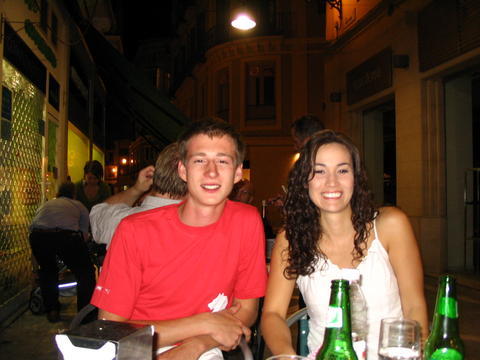
Ashley (with Rafal), exchange student from New Orleans. She just arrived in Malaga last week and will live in this dorm for a year. Beach boys gravitate towards her, but she complains they're not cute. Poor guys, hehe.
Since classes will resume in late September, the Spanish students who went home for summer vacation are now coming back, and management kind of wants to restore the old room assignments. My former flat is not too far from where I live at the moment, but I still have to carry a six-foot cabinet, a workout bench, clothes, stock food, books and kitchenware, from the third to the first floor of this building, walk three blocks down the road, and carry them again from the first to the third floor of the other building. Wow, horrendous.
As much as my body dreads it, my mind is all set to leave this place. Most of my summer flatmates have checked out of the dorm, their rooms are now empty, the flat is too quiet, and I have no competition in using the toilet. Every time somebody checks out, I get this feeling of being "left behind" which, even before, puts me in a really damp mood. So I must pack and leave soon.
Aside from my stuff, I will take along some nice memories, too. This summer, fate had it that I would meet some nice and friendly people in the dorm, most of whom were college students who came for an intensive Spanish course, medicine students who did a summer internship at UMA, or simply, friends of friends. All of them are non-Spanish so most of them live elsewhere, but even if the time we spent together was rather short, we did bond and had a great deal of fun doing things together: beach, home dinners, salsa clubs, botellon, and well, just hanging out in the flat.
So without further ado - here they are!

Robert, my German summer flatmate. Came to Malaga to take Spanish class. That girl on the left, the sweet Bettina, is my buddy's present flame.

Stanislav and Emilija, couple, medicine students from Macedonia. The guy likes to cook a lot, and even though I swear he was overcharging us for the home dinners, that ravioli recipe was truly unbeatable!

Gabriel - cool, easy-going Peruvian guy. Works at the dorm cafeteria as a waiter. Aside from Peruvian blood, he's a third something else, and the other third is still something else. He explained it to me once, but I forgot all about it. Really, it's that complicated.

Miodrag, medicine student from Croatia. Like the Macedonians, he was here for hospital internship. He is what you call resourceful. Falling short of cash during his stay here, he was selling people his hospital meals and some music CDs he'd asked Robert to burn. Nice, big-brother type of guy. That girl on the left is his hot Russian target.

Max, funny Italian guy, medicine student, too. When he was in Sevilla with Miodrag, their stuff got stolen in the car, including his shoes, so he had to walk to the police station barefoot!

Rafal and Asha, couple, Polish friends of Ashley. Rafal was an exchange student at Ashley's high school several years back. This couple looks so young, you wouldn't guess their age!
Ashley (with Rafal), exchange student from New Orleans. She just arrived in Malaga last week and will live in this dorm for a year. Beach boys gravitate towards her, but she complains they're not cute. Poor guys, hehe.
lunes, septiembre 12, 2005
Summer backpacking 2005
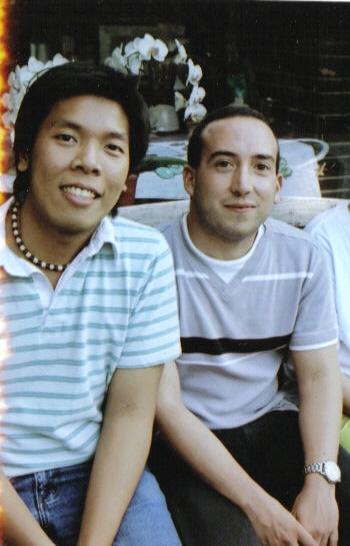
Whew, Europe in a flash! That sums up my summer backpacking trip 2005. In 24 days, from August 9 to September 1, we were able to cover a total of 20 European cities in five magnificent countries, many thanks to a bottomless train ticket called Interrail. Really, I'd never travelled that fast before, and perhaps due to such speed of setting out from one destination to the next, I swear my brain kind of suffered from temporary memory loss. Changing cities almost everyday, I found that things and time were passing by so fast, that, many times during the trip, I couldn't recall where we'd been to the day before! Thanks to George Eastman for this thing called camera; over three weeks I used up 8 rolls!
Besides the fun, the trip was truly exhausting. Reading maps, walking (a lot), sleeping with strangers, walking in the rain, reading guidebooks and brochures, climbing up towers and cathedrals, locating cheap Turkish/Chinese restaurants, carrying a 10-kilo backpack - these were touristic challenges we had to overcome everyday. So it's true that travel changes you, in the sense that it wears you out. In Den Hague, we ran into an Australian lad who had been backpacking for more than one month. Really, he seemed like he was aging, his posture looked kind of unsteady, his movements fragile, and he talked really slowww...
I was fortunate enough to find a travel partner so things were more manageable. This is Jose Maria, cathedral-fanatic, coin, postcard, key chain-collector, patient travel buddy.
From here on, I will try to capture the highlights of the trip in six different snippets. If your eyes can take it, feel free to scroll down and enjoy!
Summer 2005: Barcelona
As I usually travel here by bus or train, I think of Barcelona as a stopover. If you're headed north to go to Europe, unless you're taking a plane, most likely it is necessary to pass by Barcelona since it's a major city near Spain's border with France, in order to get out of Spanish territory. So perhaps because of that, I have never really made an effort to organize a trip to visit it. It has always been an obligatory rest point on the way to my real destination.
 We went to Barcelona (for stopover again, hehe) and myy, how mistaken I was! We only spent about ten hours there, as we had to board a train to Geneva in the evening, but I knew this city deserved much more weight in our itinerary! After breakfast, we quickly hit the road to see the major sights, and I fell in love with the city. Barcelona has great architecture (my weakness), the streets are beautifully lined with trees, the beach is nearby, and the size of the roads look just right. The streets and the old buildings have an appeal that makes you inexplicably happy just by looking at them! I think I told Jose Maria that given a choice, I would want to live there.
In the picture, you see the entrance filled with tourists to Barcelona's gothic pride, La Sagrada Familia.
In this picture, you will see another sample of Antoni Gaudi's architectural feats, which typically exude a "wavy feel." He was also the architect of La Sagrada Familia.
 We went to Barcelona (for stopover again, hehe) and myy, how mistaken I was! We only spent about ten hours there, as we had to board a train to Geneva in the evening, but I knew this city deserved much more weight in our itinerary! After breakfast, we quickly hit the road to see the major sights, and I fell in love with the city. Barcelona has great architecture (my weakness), the streets are beautifully lined with trees, the beach is nearby, and the size of the roads look just right. The streets and the old buildings have an appeal that makes you inexplicably happy just by looking at them! I think I told Jose Maria that given a choice, I would want to live there.
In the picture, you see the entrance filled with tourists to Barcelona's gothic pride, La Sagrada Familia.
In this picture, you will see another sample of Antoni Gaudi's architectural feats, which typically exude a "wavy feel." He was also the architect of La Sagrada Familia.

Summer 2005: France

From a stopover in Geneva, we reached France at 8 am. Our first stop, Lyon, had nothing really special to make you awestruck, although Lonely Planet seems to glorify this city with over "300 meticulously restored medieval and Renaissance houses." Frankly speaking, I found it too modern in style and whatever old structures Lyon has could not exactly demand my admiration. The highlight of this trip was a half-an-hour trek to a hilltop to see the Basilique Notre Dame de Fourviere, from where we had a fantastic view of the city landscape beautifully lined by the Rivers Rhone and Saone.
Next, it was Strasbourg, stark contrast of downer Lyon. How I love this city! In its old quarter, the houses were just unbelievably beautiful! Half-timbered, with chimney-topped triangular roofs and rows of tall glass windows, these houses pitched on cobbled streets would have you gawk at them for hours! At this point in the trip, Jose Maria and I had a little confusion. We were locating a place called Petite France, where there's supposed to be more of these houses, but we had trouble reading the map. After numerous attempts, we reached a spot which he believed was Petite France, but which I thought wasn't, so whether we have really been to that place will forever be a mystery!
During the last leg of the trip, on the way back to Spain, I passed by Paris. It was my second time there so I decided to just take it easy. I went to some of the sights I'd not been to, like the Picasso museum, and bought a souvenir bag for my mom.
Aside from that picture on the right, in this picture you will see other typical houses in Strasbourg.

In this picture, you will see me in Lyon's city center.

In this picture, you will see the Flame of Liberty in Paris, a simple memorial to Princess Diana. The picture shows the underground pass where, chased by paparazzi, her car had an accident and she met her fate. Reminds me of my high school friend Lotin.

Trivia: Did you know that Filipinos are allowed to enter Switzerland without a visa?
Summer 2005: Luxembourg
From France, we got to Luxembourg late in the afternoon. From the cold weather, as if it weren't summer, we could tell that our location was getting much higher in the world map. My first impression of Luxembourg was that it seemed a bit tame and laid-back, but as soon as we reached the main plaza, that first opinion was proved wrong. This place is so original - all the places we'd been to, and all that we would later see during the trip, would have nothing similar to Grund, the lower town, where you find old houses and buildings with grey pointed roofs. I'd never seen in Europe anything similar to such architectural style, and sure, they were lovely! The grey pointed roofs seemed like piercing the sky!

The city itself was perched on a hilltop, and residential areas spread out at the bottom of the hill. Our hostel was rather badly located, at the bottom, so that many times we had to go up and down the hill! In the evening, we had some beer at the main plaza, and eavesdropped on the Spanish acoustic concert at the cafe beside ours. Our first attempt to find a gay pub failed, but we ran into a really nice, cute waiter along the way...
In this picture, you will see the Bock Casemates, WW II bomb shelter. With the casemates, we almost had a repeat of the Petite-France-espisode, but this time I made sure we saw it.
In this picture, you will see for-tourists goings-on at the main plaza.

The city itself was perched on a hilltop, and residential areas spread out at the bottom of the hill. Our hostel was rather badly located, at the bottom, so that many times we had to go up and down the hill! In the evening, we had some beer at the main plaza, and eavesdropped on the Spanish acoustic concert at the cafe beside ours. Our first attempt to find a gay pub failed, but we ran into a really nice, cute waiter along the way...
In this picture, you will see the Bock Casemates, WW II bomb shelter. With the casemates, we almost had a repeat of the Petite-France-espisode, but this time I made sure we saw it.

In this picture, you will see for-tourists goings-on at the main plaza.
Summer 2005: Belgium

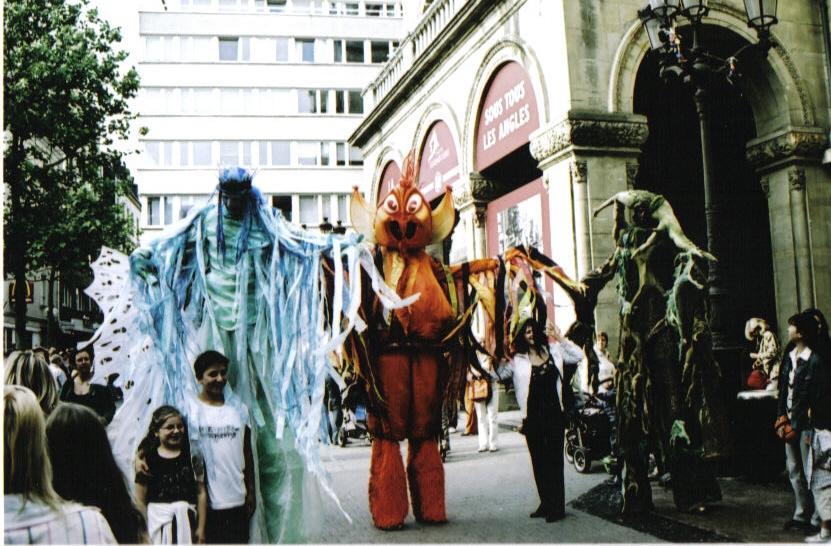
Then, it was Belgium. By this time, my potbelly was beginning to show because of all the beer-tasting! Coming to Belgium didn't improve my deteriorating shape as this country is famous for its numerous beer varieties, and chocolates. Anyway, we stayed there for four nights and made Brussels our base, from which we set out on day-trips to four cities.
Brussels - crowded, cosmopolitan, but not confusing. Despite the crowds, it was still possible to admire the city's magic. My favorite spot is Grand Place (see pic on the left), the central square, where you find the town hall and other guildhalls, all in magnificent baroque style. Here, we finally found a gay pub. It wasn't, as in most European countries, like the gay bars in Manila where prostitution is the main thing; people go to gay pubs to meet other gays. But that night, they had a show; as soon as we opened the door we saw onstage this gay gigolo wiggling his rod. I could only say one word - wow.
Bruges - lovely. Though it had pretty much the same stuff to offer as Brussels, this city had plenty of beatiful red-brick houses that looked almost like dollhouses. I couldn't take my eyes off them! My only bad experience in Bruges was that I was ripped off in a restaurant!
Ghent - Here we met up with Lenny, a nice Belgian girl whom Jose Maria had met over the Internet a few years ago. She took us on a walking tour of Ghent, the highlight of which was a fortress with a rather disturbing exhibit about different ways of torturing people. Around evening, she took us to dinner at her house in Tielt.
Tielt - Lenny's family had a nice house in a quiet part of town, some 15 minutes by car from the train station. Her mom cooked dinner for us, and I was quite surprised because the main fare was something similar to paksiw na pata. That dinner was a real highlight, because we were able to mix with locals and welcomed into their house. It's something that rarely happens to tourists!
Antwerp - hometown of Belgian painter Pieter Paul Rubens. At the cathedral, we saw some nice religious paintings of Rubens.
In this picture, you will see the numerous beer varieties in Belgium.

In this picture, you will see the brick houses in Bruges.

In this picture, you will see the fortress in Ghent.

In this picture, you will see Lenny and her mom with Jose Maria in their house in Tielt.

In this picture, you will see me standing in front of a statue of Rubens in Antwerp.

Suscribirse a:
Entradas (Atom)