lunes, septiembre 12, 2005

Summer backpacking 2005


Whew, Europe in a flash! That sums up my summer backpacking trip 2005. In 24 days, from August 9 to September 1, we were able to cover a total of 20 European cities in five magnificent countries, many thanks to a bottomless train ticket called Interrail. Really, I'd never travelled that fast before, and perhaps due to such speed of setting out from one destination to the next, I swear my brain kind of suffered from temporary memory loss. Changing cities almost everyday, I found that things and time were passing by so fast, that, many times during the trip, I couldn't recall where we'd been to the day before! Thanks to George Eastman for this thing called camera; over three weeks I used up 8 rolls!

Besides the fun, the trip was truly exhausting. Reading maps, walking (a lot), sleeping with strangers, walking in the rain, reading guidebooks and brochures, climbing up towers and cathedrals, locating cheap Turkish/Chinese restaurants, carrying a 10-kilo backpack - these were touristic challenges we had to overcome everyday. So it's true that travel changes you, in the sense that it wears you out. In Den Hague, we ran into an Australian lad who had been backpacking for more than one month. Really, he seemed like he was aging, his posture looked kind of unsteady, his movements fragile, and he talked really slowww...

I was fortunate enough to find a travel partner so things were more manageable. This is Jose Maria, cathedral-fanatic, coin, postcard, key chain-collector, patient travel buddy.

From here on, I will try to capture the highlights of the trip in six different snippets. If your eyes can take it, feel free to scroll down and enjoy!

Summer 2005: Barcelona

As I usually travel here by bus or train, I think of Barcelona as a stopover. If you're headed north to go to Europe, unless you're taking a plane, most likely it is necessary to pass by Barcelona since it's a major city near Spain's border with France, in order to get out of Spanish territory. So perhaps because of that, I have never really made an effort to organize a trip to visit it. It has always been an obligatory rest point on the way to my real destination.

We went to Barcelona (for stopover again, hehe) and myy, how mistaken I was! We only spent about ten hours there, as we had to board a train to Geneva in the evening, but I knew this city deserved much more weight in our itinerary! After breakfast, we quickly hit the road to see the major sights, and I fell in love with the city. Barcelona has great architecture (my weakness), the streets are beautifully lined with trees, the beach is nearby, and the size of the roads look just right. The streets and the old buildings have an appeal that makes you inexplicably happy just by looking at them! I think I told Jose Maria that given a choice, I would want to live there.

In the picture, you see the entrance filled with tourists to Barcelona's gothic pride, La Sagrada Familia.

In this picture, you will see another sample of Antoni Gaudi's architectural feats, which typically exude a "wavy feel." He was also the architect of La Sagrada Familia.

Summer 2005: France


From a stopover in Geneva, we reached France at 8 am. Our first stop, Lyon, had nothing really special to make you awestruck, although Lonely Planet seems to glorify this city with over "300 meticulously restored medieval and Renaissance houses." Frankly speaking, I found it too modern in style and whatever old structures Lyon has could not exactly demand my admiration. The highlight of this trip was a half-an-hour trek to a hilltop to see the Basilique Notre Dame de Fourviere, from where we had a fantastic view of the city landscape beautifully lined by the Rivers Rhone and Saone.

Next, it was Strasbourg, stark contrast of downer Lyon. How I love this city! In its old quarter, the houses were just unbelievably beautiful! Half-timbered, with chimney-topped triangular roofs and rows of tall glass windows, these houses pitched on cobbled streets would have you gawk at them for hours! At this point in the trip, Jose Maria and I had a little confusion. We were locating a place called Petite France, where there's supposed to be more of these houses, but we had trouble reading the map. After numerous attempts, we reached a spot which he believed was Petite France, but which I thought wasn't, so whether we have really been to that place will forever be a mystery!

During the last leg of the trip, on the way back to Spain, I passed by Paris. It was my second time there so I decided to just take it easy. I went to some of the sights I'd not been to, like the Picasso museum, and bought a souvenir bag for my mom.

Aside from that picture on the right, in this picture you will see other typical houses in Strasbourg.

In this picture, you will see me in Lyon's city center.

In this picture, you will see the Flame of Liberty in Paris, a simple memorial to Princess Diana. The picture shows the underground pass where, chased by paparazzi, her car had an accident and she met her fate. Reminds me of my high school friend Lotin.

Trivia: Did you know that Filipinos are allowed to enter Switzerland without a visa?

Summer 2005: Luxembourg

From France, we got to Luxembourg late in the afternoon. From the cold weather, as if it weren't summer, we could tell that our location was getting much higher in the world map. My first impression of Luxembourg was that it seemed a bit tame and laid-back, but as soon as we reached the main plaza, that first opinion was proved wrong. This place is so original - all the places we'd been to, and all that we would later see during the trip, would have nothing similar to Grund, the lower town, where you find old houses and buildings with grey pointed roofs. I'd never seen in Europe anything similar to such architectural style, and sure, they were lovely! The grey pointed roofs seemed like piercing the sky!


The city itself was perched on a hilltop, and residential areas spread out at the bottom of the hill. Our hostel was rather badly located, at the bottom, so that many times we had to go up and down the hill! In the evening, we had some beer at the main plaza, and eavesdropped on the Spanish acoustic concert at the cafe beside ours. Our first attempt to find a gay pub failed, but we ran into a really nice, cute waiter along the way...

In this picture, you will see the Bock Casemates, WW II bomb shelter. With the casemates, we almost had a repeat of the Petite-France-espisode, but this time I made sure we saw it.

In this picture, you will see for-tourists goings-on at the main plaza.

Summer 2005: Belgium


Then, it was Belgium. By this time, my potbelly was beginning to show because of all the beer-tasting! Coming to Belgium didn't improve my deteriorating shape as this country is famous for its numerous beer varieties, and chocolates. Anyway, we stayed there for four nights and made Brussels our base, from which we set out on day-trips to four cities.

Brussels - crowded, cosmopolitan, but not confusing. Despite the crowds, it was still possible to admire the city's magic. My favorite spot is Grand Place (see pic on the left), the central square, where you find the town hall and other guildhalls, all in magnificent baroque style. Here, we finally found a gay pub. It wasn't, as in most European countries, like the gay bars in Manila where prostitution is the main thing; people go to gay pubs to meet other gays. But that night, they had a show; as soon as we opened the door we saw onstage this gay gigolo wiggling his rod. I could only say one word - wow.

Bruges - lovely. Though it had pretty much the same stuff to offer as Brussels, this city had plenty of beatiful red-brick houses that looked almost like dollhouses. I couldn't take my eyes off them! My only bad experience in Bruges was that I was ripped off in a restaurant!

Ghent - Here we met up with Lenny, a nice Belgian girl whom Jose Maria had met over the Internet a few years ago. She took us on a walking tour of Ghent, the highlight of which was a fortress with a rather disturbing exhibit about different ways of torturing people. Around evening, she took us to dinner at her house in Tielt.

Tielt - Lenny's family had a nice house in a quiet part of town, some 15 minutes by car from the train station. Her mom cooked dinner for us, and I was quite surprised because the main fare was something similar to paksiw na pata. That dinner was a real highlight, because we were able to mix with locals and welcomed into their house. It's something that rarely happens to tourists!

Antwerp - hometown of Belgian painter Pieter Paul Rubens. At the cathedral, we saw some nice religious paintings of Rubens.

In this picture, you will see the numerous beer varieties in Belgium.

In this picture, you will see the brick houses in Bruges.

In this picture, you will see the fortress in Ghent.

In this picture, you will see Lenny and her mom with Jose Maria in their house in Tielt.

In this picture, you will see me standing in front of a statue of Rubens in Antwerp.

Summer 2005: Netherlands


First off, contrary to popular misconceptions, drugs are NOT legal in the Netherlands. You can go to jail if they catch you in posession of drugs exceeding a certain amount. True, the Dutch can freely consume substances up to a few certain grams, but even then, this act is said to be simply "tolerated" by the police. Nonetheless, cannabis is in good circulation and some cities have coffeeshops where they serve hashcakes, a hashish-containing cake that will certainly give you the "high."

Our first stop in the Netherlands was Den Hague, which was awful. I don't understand why a lot of tourists care to include it in their itinerary, neither why the Dutch speak highly of it. Since the city was a big name in tourist circles, we had fairly high expectations, only to find a modern city with absolutely nothing interesting in it! That place was a real downer!

Next was Amsterdam, which like Belgium, was our base for day-trips to three more cities. Sex shops, gay pubs, hashish-serving coffeeshops, bicycles, water canals, brick houses, private boats and ferries - this is Amsterdam (at least, part of it). We visited the Rijksmuseum and the Van Gogh Museum, the latter being one of the few art museums that I've ever come to like. At the youth hostel, we met two nice Dutch and German college girls who were billeted there and working for the summer. The city had a vibrant bar scene, so during those four days, we went clubbing quite often. There, in the gay district, where ROYGBIV flags abound, I learned what a darkroom was - and it's not a room for developing black-and-white films!

Zaans Schans - Nobody really goes to Zaans Schans, a low-profile town 20 minutes by train from Amsterdam, but it did suit our purpose: we wanted to see windmills! Luckily, they had quite a number of these things beautifully located beside the river, inside a grassy area used for cattle-raising and cheese-making. That day-trip was truly relaxing for me, as I simply enjoyed looking at the windmills and feeling the cool countryside breeze.

Utrecht and Haarlem - These two are your regular European city. If you have been to Amsterdam, unless you want a more laid-back environment, there's no point in visiting these cities.

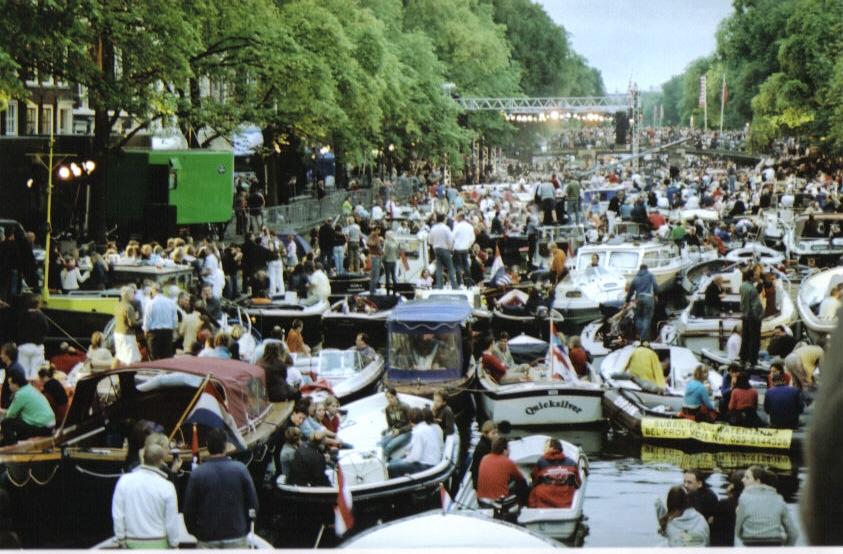
In this picture, you will see hundreds of private boats who came all the way to Amsterdam for a special event.

In this picture, you will see the Binnenhof, the former Parliament building in Den Hague.

In this picture, you will see the farm in Zaans Schans.

In this picture, you will see the Instituto Cervantes in Utrecht.

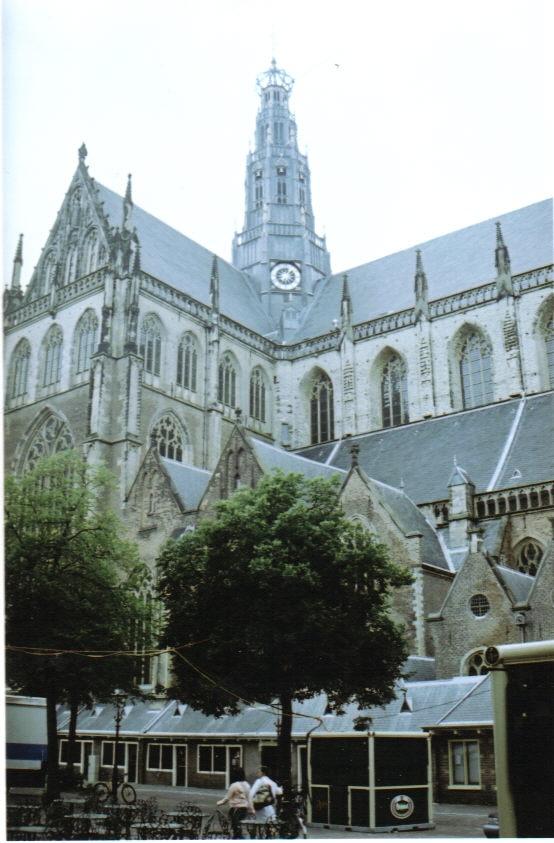
In this picture, you will see the Grote Kerk van St Bavo, Haarlem's cathedral.

Summer 2005: Germany


By the time I reached Germany, on the third week, I was already too exhausted from the trip and much of my touristic drive had been dried up. Jose Maria went only as far as the Netherlands, as he had to go home for some family thing, so that throughout the last week I travelled alone. Then, I was seriously lacking energy and my body was starting to show symptoms like that Australian guy we'd met in Den Hague: deteriorating posture, aging, failing voice and slow speech (hehe). So in Germany my travelling motto was simple: "Slow down," "Take it easy." I remember telling Jose Maria that if I hadn't reserved accommodation in Germany and hadn't paid for return flight, I'd be so glad to go home with him. But thank goodness, I didn't!

My first stop was Hamburg, which wasn't really that bad though it didn't have anything I hadn't seen in Amsterdam. There was a huge red-light district, which was rather lacking pulse, and the city's port, one of the most important in Germany and Europe, was too chaotic.

Cuxhaven - Realizing there wasn't much too see in Hamburg, I squeezed in a day trip to Cuxhaven. It was far from Hamburg (four hours) and, exhausted from the night before, I woke up late and arrived in Cuxhaven past noon. I was supposed to see a protected national park near Cuxhaven's port, but since I arrived late, I missed the boat! Too bad, I just ended up taking a short cruise around the port...

Berlin - my favorite German city. Hermann was right when he told me five years ago that Berlin was nice, because that's what it truly is. It boasts palaces, monuments, old churches, museums, and perhaps once they are done with some construction work, it might just be able to compete with Rome. But more than for its beauty, I like Berlin for its history. The Jewish Memorial Museum, besides the A-Bomb Museum in Hiroshima, was the only museum that almost made me cry. It has a host of other historically important sites, such as the Berlin wall, the Charlie Checkpoint and the former Nazi concentration camps. I went to a gay pub in Berlin, in search of a darkroom (haha!) and I found that the Germans were really friendly. Seeing I was alone, two guys just started talking to me at the bar and gave me tips about the city!

Munich - This city was great, but then again, it didn't have anything I hadn't seen in my previous destinations. Well, except for the 1972 Olympic Stadium, the Octoberfest site, and the English Park where the beach-deprived locals just lie totally naked on the grass to sunbathe! The highlight of this stop was lunch in a beer garden; lunch was a simple affair of weisswurst (white sausage), half-a-liter beer, french fries and brezel. By the way, if in Japan people eat sashimi, in Munich they eat raw fish stuffed into a bun with fresh onions (rollmops)! For curiosity's sake, I gave it a try...

Cologne - By the time I reached Cologne, my energy levels had already hit rock bottom. Luckily, learning from past experience, I kind of splurged on accommodation here and reserved a single room in a cheap hotel. The Cologne cathedral, known as the Mt. Everest of cathedrals, did not really impress me much, but I must still concede it was beautiful. I fell in love, too, with the University of Cologne, with its far-stretching grass fields, low-rise buildings and tree-lined walkways, as it kind of reminded me of ICU, my former school in Japan. Really, at that time, I was just so happy to wander around the campus, take in the smell of grass, and watch the students lying on the fields and jogging around. There, I found myself in my best mood after days of exhaustion...

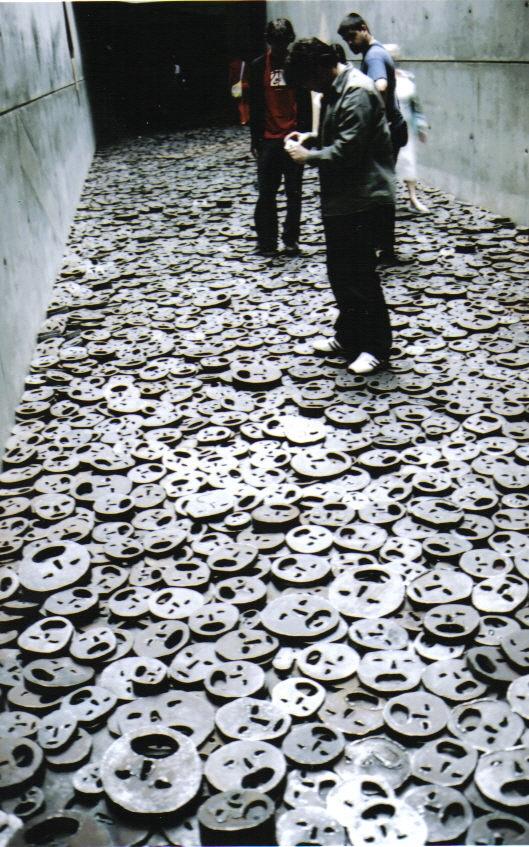
This picture shows an artist's tribute to the Jewish victims of the Holocaust, in Berlin's Jewish Memorial Museum. These are face-shaped metal plates, and you have to step on them as you walk around the exhibit room. Gives you quite an eerie feeling...

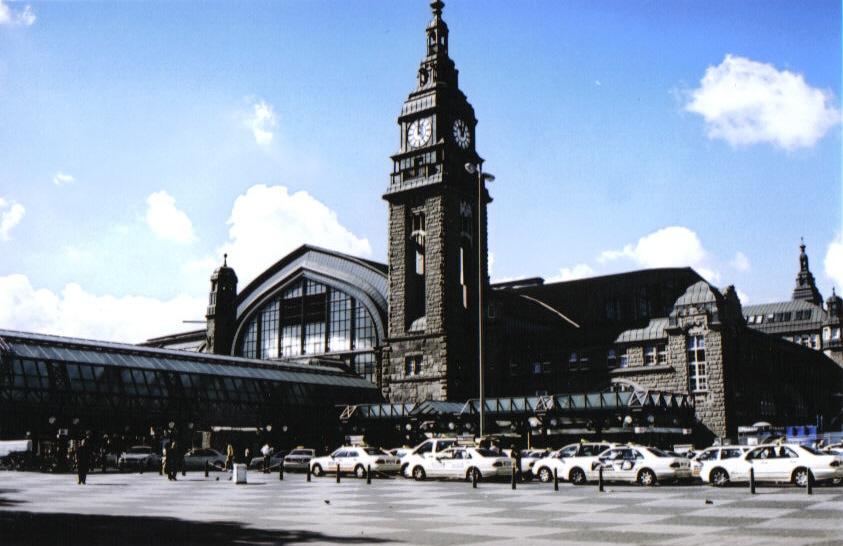
In this picture, you will see Hamburg's main train station.

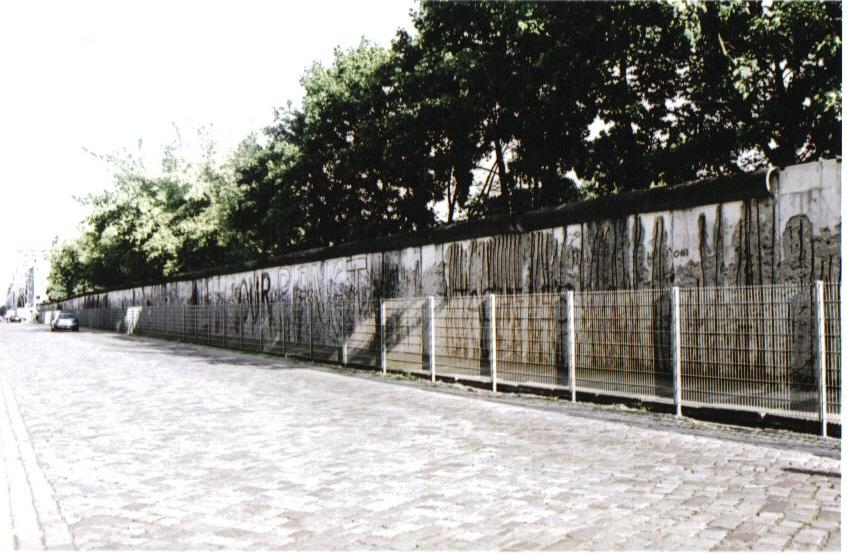
In this picture, you will see what's left today of the Berlin Wall.

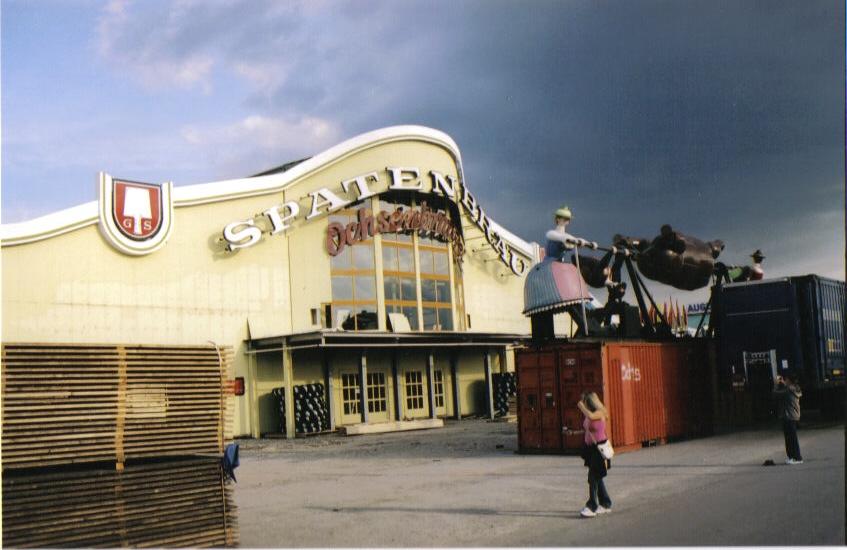
In this picture, you will see a typical brewery in the Octoberfest grounds in Munich.

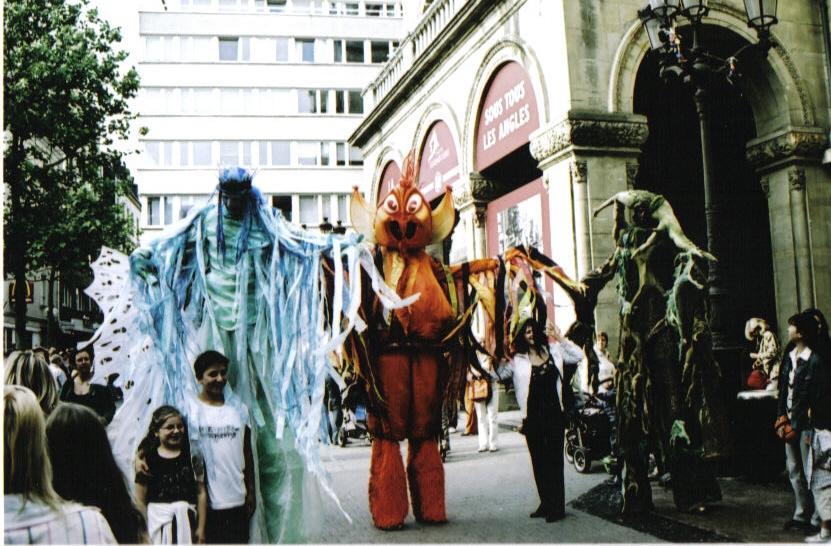
In this picture, you will see a street-performing Polish band in Cologne. I liked their music so much I bought their CD.

FOOTNOTE TO THIS KILOMETRIC TRAVEL ENTRY: I'm quite thankful that this trip did happen, despite some difficulties with preparation. Before leaving Malaga, having finished my first year in the master's program, I was already too tired and didn't know how to recover my former happy state. This trip was just the break I needed, and even though it exhausted me too at some point, it made me realize how I like the city I now live in, Malaga, my home in Spain. Well, till the next backpacking trip!

jueves, septiembre 08, 2005

A trying affair

How can life be so hard sometimes? Why does it have to be more complicated than one can possibly swallow? Isn't there a way to forever keep it in bite-sized bits so that one can take and digest it easily? For the past few weeks, I have had to deal with colossal complications in this small corner of my room, and now it appears that my poor stomach is starting to revolt. At this very moment, I feel the urge to vomit due to all the unjustified stress that this technical problem of mine has wreaked upon my system.

So before I continue, let me just vomit first: Puuuuuutangggg inaaaaaa!!! I hope I have made it sound really crisp, and palpable.

The culprit of this ranting espisode that I have set out to do now is this very machine that I am using to write this blog. This laptop got infected by a virus one month ago, and by some strange twist of fate, in the process of reformatting the hard drive and installing all the program files again, the overused DVD drive expired in the end. Although I'd been lucky enough to finish saving Windows XP and some vital drivers, before the DVD drive finally said goodbye, it now meant that I would no longer be able to play music, video, burn discs, or install new software again.

From here, I was faced with two options: first, I could contact the manufacturer and take advantage of the machine's one-year warranty, but knowing how time-consuming this action could be, I chose the second option and purchased a new external DVD drive. This decision led to major disappointment #1: after dishing out 85 euros for the cheapest model there was, I found out that it's not possible to boot from this external device. Fine, I could now play music and videos and burn discs, but if this fucking source of my present misery was ever struck again by a virus, it wouldn't be possible to boot from the external drive!

My laptop, by the way, was hardly eleven months old.

Tired, exasperated, hopeless, smelly and in urgent need of a bath, I picked up my mobile to call Dell. On the phone, in order to establish that the drive was truly malfunctional, I was instructed to perform a series of tests which my laptop passed with ace marks frankly speaking. After one hour of mechanical surgery, as I was reinserting the last couple of screws into this poor machine's body, the technical support agent slapped me with major disappointment #2: the laptop's warranty would only be honored in Japan where the item had been bought. In Spain, they would simply not recognize my warranty!

If I were rich, I swear I would happily fling this failure of a computer right smack on the wall and let the garbage collectors dispose of it. I must clarify that these events did not happen on a single day, rather over several weeks, so it is a kind of recurring and prolonged suffering that I am talking about.

I kew I was clearly far from rich, and I couldn't afford to buy a new laptop that easily, so I decided to call Dell again, having in mind the intention of buying an internationally valid warranty good for one year. At this point, I had already wasted some 50 euros calling Dell's hotline, and been suffering too from occasional hallucinations and some mild feet pain attacks. But then came major disappointment #3 like my sanity hadn't suffered enough blows: I was told that even if I bought an international warranty, it wouldn't cover retroactively the damaged DVD drive. It would only be valid for future breakdowns!

I think I will end up buying a new DVD drive from Dell, if my last-ditch attempt at saving money by contacting their technical team in Japan and using my existing warranty fails. So what have I learned from all this? One shouldn't spend too much on technology. It is foolish to think that buying an expensive and branded technology will ensure its long life. Whether it's a computer, CDman, digital camera, printer, palm organizer with prestigious trademarks like Dell, Sony, Nikon, Toshiba, HP, etc., it is their predestiny to break down in the end. I hope that many consumers have realized this life truth by now, so that when their little gadget's passage to the afterlife finally comes, they won't harbor false hopes that it will reincarnate or something.

martes, agosto 09, 2005

Pre-departure rant

Last Friday I was at Carrefour to buy some stuff for my backpacking trip, which starts tomorrow. Judging from past experience, I can't consider myself the type who is fond of shopping, especially if this occurs under pressure a few days from the date of departure. The whole experience of walking back and forth inside the mall, of spending much of your thought power on which size, design or color to pick, is something I find too time-consuming. Perhaps contrary to shopaholic testimonies, I think it is quite stressful.

I went to Carrefour because everything there is cheap. It is actually a supermarket that sells everything from food, clothes, domestic appliances, kitchenware, books to furniture. I was in no position to negotiate for a shopping spree at El Corte Ingles, because my financial state had been rather shaky, and scrimping seemed the only logical decision. Trying as quickly as possible to get my shopping errands over with, I forced myself to finish it all in two days, the outcome of which was a pair of grey pants, two colored shirts, a long-sleeved undershirt and a formal polo shirt for the night-outs. These are probably the cheapest clothes I will ever buy. Since Carrefour was on sale season, prices hit rock-bottom - I got two shirts at 2 euros each. With that, I could otherwise buy a couple of ballpens, or a bottle of cheap shampoo.

Then, I also got to buy a few extras: a pair of sunglasses, a hand-made bracelet and a beaded necklace for ethnic effect. A few hours from now, I have to stuff them in my mountaineer's backpack, and test whether my baggage-reduction skills have improved any since the last time I did a tour. Then, I'm ready to go.

The trip will take a little over three weeks. I have always wanted to do it longer - two months for example - like some travellers I've met at youth hostels before, but then time and money have always been rather scarce. Add to that the fact that travelling non-stop for two months is pretty exhausting. During the first and second week, we will cover France, Belgium, Luxembourg and the Netherlands, but from the third week on, I will be hitting the train tracks of Germany on my own. My travel partner, a Spanish guy I met over the Internet, is going home earlier.

I'm very excited about this trip since unlike before, I'm now travelling with someone. And that should make things more enjoyable, and easier. Well, we shall see...

Europe, here I come!!!

jueves, agosto 04, 2005

Does pride help?

The Spanish are proud. This is the strongest message I have been getting from them over the last ten months. They love their hometown, they love their history, they love their culture, their language, their country. It is a kind of pride that is sometimes irrational, at times fascinating, and it is planted deeply within every one of them.

Last school year I shared a flat with three Spanish guys, and out of the blue they would walk up to me to say: "I think Spain is the best country in the world." Actually, none of them could be considered well-traveled, Portugal being the farthest one of them had reached, but in their minds their country exists above the rest.

Manolo, the guy from Cordoba, liked very much to bring up the topic of food, and whenever he did, he would always seal the conversation with: "I think Spanish food is the best there is." Truth is, his gastronomic adventures had been quite limited, and he was quite averse to trying out foreign food. Once I offered him some Japanese sweets, and the reaction I got was one of surprise. Backing off, he said something like: "What the fuck is this?"

Actually, those were little Japanese rice cakes with sweet beans inside.

In Spain, Russian salad is very common that one day I started to wonder if indeed it was of Russian origin, or Spanish. It is normally served as a tapa, together with other traditional Spanish food. So I asked my other flatmate Julio about it, and he said he was unsure. You have to understand that this salad is quite popular and the Spanish love it. Perhaps thinking along these lines, he was quick to add: "It is more likely that Russian salad is actually Spanish."

Regarding French fries, which are popular the world over, Manolo had the same theory: "You know, French fries could actually be Spanish."

The kind of pride that they have does not follow logic or reason. Rather, it stems from a deep feeling of love for their own, but without knowledge of what other cultures are like.

Over dinner, one professor told me that to her English was not a good language, as it didn't quite measure up to the richness of Spanish. I was tempted to ask if she spoke English, but I didn't like to embarrass her as I knew she didn't.

This pride is so great, sometimes they will try to impose their culture on you. When people here ask me if the Filipinos speak Spanish, they get disappointed over the lost of their influence on us. They say something like: "What a pity. Pass a law or something, so people there will study Spanish again."

I have to admit I found this pride quite annoying at first. As a Filipino, the concept of yabang is embedded in me, as much as pride is in them. Hearing them talk, I would think: "Ang yabang naman nito!!!" But later on, as I tried to understand them more as a people, it began to fascinate me why they think and behave that way.

So one day I asked Manolo why the Spanish are so proud. Is it because of the education? Are they taught this pride in school? The question actually surprised him, and thought it was a bit odd. He didn't have a reason to offer, because he had never thought about it. To him, it has always been that way; loving Spain is the only natural way to think, to behave.

I have seen this pride in other nationalities, too - Venezuelans, Bolivians, Brazilians and Russians. They are from developing nations, yet they claim that life where they come from is much better than Spain. I don't know if that is true, but fact is, they are proud of their own.

Interestingly, I didn't see this pride in the Japanese, whose country is rich and powerful. When they talk about Japan, they tend to understate its achievements, always conceding to America or something. Even the Chinese people I've met didn't seem to possess such pride, not knowing their economy has become a major threat to the US.

When I asked myself the same question I'd asked Manolo, I couldn't find an answer. Why are the Filipinos so unproud of themselves? Is it because of the education? Are we taught to think that way in school? When people ask me, "Is the Philippines beautiful?" I find it hard to say yes. It is my nature, or at least it's my first impulse, to think that my country is awful, corrupt and without a future. I think most Filipinos are like that.

Yet when I come to think of it, such lack of pride of the Filipinos is just as irrational as the Spanish hubris. It is based on emotion, humility, lack of knowledge and rather exaggerated notions of how life good is outside the Philippines.

What if we had this Spanish pride? Would it change things?
miércoles, agosto 03, 2005

La gente me mira

La gente me mira, cosa que a mi no me gusta nada; de hecho, me fastidia. Cuando camino por la calle, entro en un bar, o subo al autobús, me doy cuenta de que la gente me mira, lo mismo que si fuera una pintura en el museo, un partido de fútbol en la tele, un bebé rodeado por su familia, un espectáculo. A menudo les sorprendo mirándome de cabeza a pie, y en cambio les miro tanto que no pueden hacer nada más que apartar la vista. En otros momentos no les miro, pero siempre tengo la sensación de que me están mirando.

Al principio creí que era por curiosidad. La gente me mira por mis ojos chinos, la piel morena, mi pinta distinta. Como vivo en una ciudad donde los asiáticos son cuatro gatos, atraigo mucha atención, tengo poder magnético. Recuerdo que pasa lo mismo en Japón y Filipinas donde es difícil para los extranjeros esconderse, en especial los rubios, porque siempre se hacen notar en todas partes. Incluso yo era propenso a mirarles de vez en cuando, aunque procuraba no hacerlo.

También la gente me saluda en la calle, cosa que tampoco me gusta. Estaría bien si me dijeran "Hola," pero la verdad es que me dicen "Ni hao." En primer lugar no soy chino, aunque lo parezco, además si lo fuera, tampoco me apetecería que la gente me saludara en chino. A veces me llaman así; cuando paso por una conglomeración de gente en la calle, o en la playa, les oigo diciendo entre ellos: "Mira, un chino," "Hay un chino," etc.

Si hubiéramos estado en Filipinas, a un español le llamarían "americano" ¡jaja!

Un día me atreví a plantear ese tema a mis amigos. Esa chica japonesa de la escuela de idiomas decia que a ella le pasaba lo mismo - le mira la gente y le llama "china" - algo que no puede aguantar. Cree que la gente es racista. Por otra parte, siempre se encuentran sorprendidos mis amigos españoles cuando se lo cuento, ya que nunca han tenido la misma experiencia. Suelen decirme que tal vez me salude la gente por motivos cordiales.

La verdad es que por mucho que lo intente entender, me resulta difícil comprender ese comportamiento. Creo que una parte de la gente aquí es racista, es un racismo que proviene sobre todo de su incultura, su carencia de conocimiento de cosas orientales. En España miran por encima del hombro a los chinos, aunque por cierto dentro de muy pocos años la economía China será más importante internacionalmente que la de España. Miran por encima del hombro a los chinos, aunque a los españoles les gusta mucho comprar en las tiendas chinas...

En realidad soy filipino, desgraciadamente en España me convierten en un chino. No me gusta que la gente me mire y me salude en chino, no obstante a partir de ahora, me da igual. Hay que recordar que también hay buena gente aquí, acogedora, abierta y simpática, y pienso seguir teniendo trato con esa gente. Por otra parte, a los demás: Así os parta un rayo ¡cojones!